

Unfamiliar software can raise questions, especially when you do not know where it came from or what it does. If you have encountered Immorpos35.3, you may be wondering whether it is legitimate, useful, or potentially unsafe. This guide explains What Is Immorpos35.3 Software in simple terms and explores what is currently known about the program. You will learn about its possible features, uses, installation, security concerns, and ways to verify it before taking action.
Understanding these details matters because an unknown application should never be trusted blindly. Keep reading to discover how Immorpos35.3 works, what experts recommend checking, and whether you should keep, remove, or investigate this software further.
What Is Immorpos35.3 Software? A Clear Definition
Immorpos35.3 is the name of a piece of software or a process that some users have encountered on their systems, and information about it online is inconsistent. Depending on where you look, you’ll find it described in very different ways: as a business automation tool, a workflow platform, a background system utility, or something tied to point-of-sale operations. That kind of inconsistency is a signal in itself, and it’s worth taking seriously before you make any decisions about the program.
The honest answer is that there’s no single, verified, authoritative source, such as an official vendor website, a documented company, or a consistent version history, that clearly confirms what Immorpos35.3 is or who publishes it. That doesn’t automatically mean it’s harmful. It does mean you shouldn’t take any one description at face value, including flattering ones. The most useful thing you can do right now is treat “Immorpos35.3” as an unidentified program until you personally verify it on your own system, which is exactly what the sections below will help you do.
Where the Name Immorpos35.3 Comes From
Version-style names like “35.3” typically suggest a build or release number, the kind of naming convention legitimate software vendors use for update tracking. However, plenty of unwanted programs and background processes borrow this same convention specifically because it looks legitimate at a glance. Without a confirmed publisher or official changelog, the naming pattern alone tells you very little about whether the software is trustworthy.
Why So Many Descriptions of Immorpos35.3 Software Conflict
When you search for details on Immorpos35.3 software, you’ll notice that different articles describe completely different functions for it. This usually happens for one of two reasons: either the software has been rebranded, repackaged, or bundled differently across various distributions, or a good chunk of the content circulating about it isn’t based on firsthand testing at all. As a reader, the practical takeaway is simple. Prioritize what you can personally verify on your own device over what any single article, including this one, claims about its features.
How Does Immorpos35.3 Software Work?
Software in this general category, tools marketed around automation, data handling, or background system management, typically works by running as a persistent process that either sits in your system tray or operates silently in the background. It may launch automatically at startup, connect to remote servers to sync data or check for updates, and interact with other installed applications through integrations or APIs.
If Immorpos35.3 is genuinely a business or productivity tool, you’d expect it to follow a predictable pattern: a visible interface or dashboard, a settings menu, an entry in your list of installed programs, and a clear way to configure or disable it. If instead you find a process running with no accessible interface, no entry in your program list, or no way to control its behavior, that’s a meaningful difference worth noting as you move through the verification steps later in this guide.
Key Features and Functions of Immorpos35.3 Software
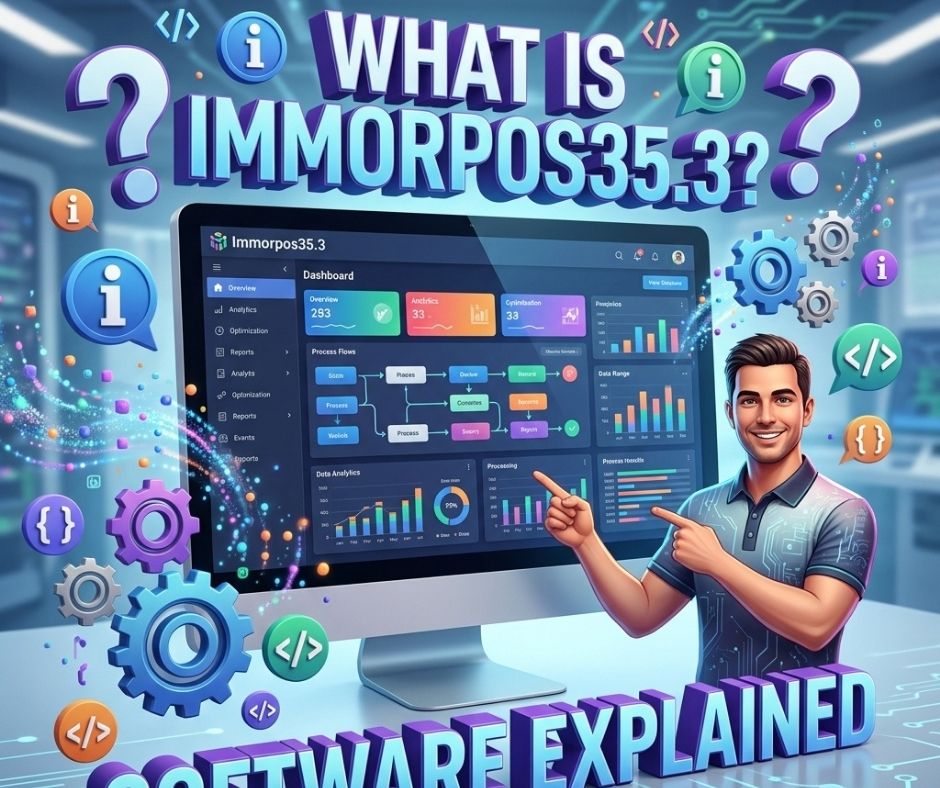
Reported Immorpos35.3 features vary depending on the source, which reinforces the point made earlier: treat any feature list as unconfirmed until you see it firsthand on your own installation. That said, here’s a breakdown of the functions commonly attributed to it across different accounts, so you know what to look for if you decide to investigate further.
| Reported Function | What It Would Typically Involve | How to Verify It Yourself |
| Workflow automation | Rule-based triggers that perform tasks automatically | Check for a visible automation builder or rules panel |
| Data reporting/dashboards | Charts, metrics, or performance summaries | Look for a dashboard interface after opening the program |
| Third-party integrations | Connections to tools like CRMs, spreadsheets, or cloud storage | Review your account permissions and connected apps list |
| System/security monitoring | Background scanning or update management | Check Task Manager for continuous background activity |
| Point-of-sale (POS) functions | Inventory tracking, transaction processing | Confirm whether the software is tied to a retail or billing setup |
If you can’t locate a visible interface matching any of these functions, but the process is still running, that mismatch between claimed purpose and actual behavior is worth flagging in the safety sections further down this guide.
What Is Immorpos35.3 Software Used For? Common Use Cases
In the accounts where Immorpos35.3 is framed as legitimate business software, it’s typically positioned as a tool for small to mid-sized organizations that need more structure than spreadsheets and email but aren’t ready for a full enterprise resource planning (ERP) system. In that context, it would be used for centralizing workflows, cutting down manual data entry, and giving managers a single dashboard instead of scattered reports across different tools.
On the other hand, if Immorpos35.3 turns up on a personal or home computer where no one installed business automation software intentionally, its presence deserves a different kind of scrutiny. Legitimate business tools are almost always installed deliberately, often through an IT department, a vendor’s official installer, or a documented onboarding process. A program with no clear installation history on a personal device is a very different situation than the same program running on a company workstation where it was set up on purpose.
System Requirements and Prerequisites for Immorpos35.3
Because there’s no verified official documentation for Immorpos35.3, this guide won’t list specific hardware or operating system requirements, doing so would mean inventing numbers that can’t be confirmed, and that wouldn’t actually help you. What matters more is a general prerequisite: before installing or trusting any software with unclear origins, confirm you’re downloading it from a source you can verify, ideally a named company with a real support page, contact information, and a documented privacy policy.
If you’re being asked to install Immorpos35.3 from a link in an email, a pop-up, or a third-party download aggregator rather than a clearly identified company website, treat that as a prerequisite failure on its own. Legitimate software distribution almost always traces back to an identifiable source, and skipping that check is one of the most common ways unwanted programs end up on a system in the first place.
How to Check Immorpos35.3 on Your Computer
The fastest way to move from uncertainty to clarity is to check your own system directly rather than relying on descriptions you find online. Here’s how to do it step by step.
- Open your process manager. On Windows, press Ctrl + Shift + Esc to open Task Manager. On a Mac, open Activity Monitor from Spotlight search.
- Search for the process name. Look for “Immorpos” or any similar variation in the list of running processes.
- Check resource usage. Note whether it’s consuming significant CPU, memory, or network activity, which can indicate what it’s actually doing.
- Right-click and open the file location. This shows you exactly where the program lives on your hard drive.
- Check the properties or digital signature. Right-click the executable file, select Properties (Windows) or Get Info (Mac), and look for a “Digital Signatures” tab or publisher information.
- Search the exact file name and hash online. Cross-reference it with a multi-engine scanning tool like VirusTotal rather than relying on a single antivirus opinion.
Finding It in Task Manager or Activity Monitor
Once you locate the process, pay close attention to its exact name and file path, since malicious programs sometimes use names that closely mimic legitimate ones with subtle misspellings. A process running from an unusual directory, such as a temporary folder or an obscure subfolder deep in your system files, is more suspicious than one running from a standard Program Files location tied to a known installer.
Checking the File Location and Digital Signature
A missing or unverified digital signature doesn’t automatically confirm malicious intent, but it does remove one of the strongest indicators of legitimacy. Genuine software from established publishers is almost always signed, and that signature can be traced back to a real company. If Properties or Get Info shows no publisher information at all, that’s a gap worth taking seriously rather than dismissing.
Is Immorpos35.3 Software Legitimate or Safe?
Based on the available evidence, there isn’t enough consistent, verifiable information to declare Immorpos35.3 definitively safe or definitively unsafe as a blanket statement, and any article that tells you otherwise without pointing you to a confirmed vendor is making a claim it can’t fully back up. What you can do instead is evaluate it against a clear set of legitimacy markers, which gives you a far more reliable answer than guessing.
Signs of a Legitimate Program
A trustworthy program typically has a findable, named company behind it with a working support contact. It appears clearly in your installed programs list with an easy uninstall option, comes with a digital signature tied to that publisher, and has consistent documentation across its own official channels rather than only third-party blog posts. If Immorpos35.3 checks these boxes on your system, that’s a strong sign it’s exactly what it claims to be.
Red Flags to Watch For
Be more cautious if the program has no visible interface, doesn’t appear in your installed programs list, runs from an unusual file location, lacks any digital signature, or arrived on your system without a clear installation you remember approving. Any combination of these signs, especially several at once, is a stronger reason for concern than any single factor alone.
Is Immorpos35.3 a Virus or Malware?
There’s no confirmed, widely documented case establishing Immorpos35.3 as malware, and it’s important not to jump to that conclusion just because information about it is scarce. Plenty of legitimate, niche, or newly released business tools have thin documentation simply because they’re small, new, or narrowly marketed. Scarcity of information is a reason to verify, not a reason to panic.
That said, the same scarcity is also exactly the condition under which unwanted programs and low-grade adware tend to thrive, since they rely on unclear identity to avoid quick detection. The responsible move is to run the process through a reputable, multi-engine scanner such as VirusTotal or your existing antivirus software, and treat that scan result, not a blog post, as your primary evidence. If your scanner flags it, follow that guidance directly. If it comes back clean and you can verify a legitimate file location and signature, you have real grounds for confidence either way.
Should You Install, Keep, or Remove Immorpos35.3?
Your decision should come down to what you actually found during the verification steps above, not general reputation. If you deliberately installed Immorpos35.3 as part of a business tool your company adopted, it has a verified publisher, and it appears normally in your program list, there’s little reason to remove it just because online descriptions of it are inconsistent. If, on the other hand, you don’t recognize installing it, can’t find a clear publisher, or your antivirus software flags it, removing it is the more sensible choice.
When in doubt, the safer default leans toward caution. Unused, unverified, or unrecognized software sitting on your system provides no benefit and only adds risk, so there’s little downside to removing anything you can’t confidently explain.
How to Safely Remove Immorpos35.3 If Needed
On Windows, go to Settings > Apps > Installed Apps, locate the program, and select Uninstall. On a Mac, drag the application from your Applications folder to the Trash, then empty it. Afterward, run a full antivirus scan to catch any leftover files or associated background processes, and check your startup programs list to confirm nothing related to it still launches automatically. If the standard uninstall option doesn’t appear, a dedicated uninstaller utility can help remove leftover registry entries or configuration files that a simple deletion might miss.
Mistakes to Avoid When Dealing With Unfamiliar Software Like Immorpos35.3
A few common missteps make situations like this worse rather than better, so it helps to know what not to do before you act.
- Don’t download “removal tools” from random pop-ups or ads. These are a common trick used to install additional unwanted software under the guise of fixing the original problem.
- Don’t trust a single source blindly, whether that source claims the software is completely safe or completely dangerous, without doing your own file-level check.
- Don’t ignore a positive antivirus flag just because the program otherwise looks normal.
- Don’t reinstall software repeatedly hoping a fresh copy will resolve suspicious behavior; investigate first.
- Don’t skip checking your browser extensions and startup list, since related components sometimes hide outside the main program itself.
Immorpos35.3 Alternatives and Safer Software Options
If you were drawn to Immorpos35.3 because you actually need workflow automation, business dashboards, or centralized data management, the good news is that the category itself is well served by established, verifiable products. Tools like Zapier and Make (formerly Integromat) handle automation with transparent, well-documented companies behind them. For broader business process management, established platforms such as Monday.com, Asana, and Zoho One offer verifiable vendors, public pricing, and long track records.
Choosing a verifiable alternative doesn’t just reduce risk, it also typically comes with better support, clearer documentation, and a real community you can turn to when something goes wrong. That’s a meaningful trade-off compared to running unclear software just because it seemed to fit a need at first glance.
Frequently Asked Questions
What is Immorpos35.3 software?
It’s a program name that appears online with inconsistent descriptions and no single confirmed publisher. Rather than accepting any one description, check the program directly on your own system using the verification steps in this guide.
Is Immorpos35.3 a legitimate program?
It depends entirely on what you find when you check its file location, digital signature, and installation history on your own device. There’s no universal answer that applies to every installation.
Is Immorpos35.3 safe to keep on my computer?
If it has a verified publisher, a clean antivirus scan, and you recognize installing it, it’s reasonable to keep. If any of those checks fail, removing it is the safer choice.
Is Immorpos35.3 a virus?
There’s no widely confirmed case of it being classified as malware, but the only reliable way to know for your specific system is to run it through a reputable antivirus or multi-engine scanner.
Why is Immorpos35.3 on my computer?
It may have arrived through a business software installation, a bundled download, or software packaged alongside something else you installed. Checking the file’s installation date and location can often clarify how it got there.
Final Verdict
The most useful conclusion here isn’t a simple yes or no, it’s a method. Rather than relying on any single article’s claims about Immorpos35.3 software, check your own system directly: confirm the file location, look for a digital signature, run a reputable virus scan, and weigh whether you actually recognize installing it. That combination of checks will tell you more than any generic description ever could.
If everything checks out clean and verifiable, there’s no strong reason to worry. If it doesn’t, removing it and switching to a well-documented, established alternative is the more sensible path forward. Either way, you’re now equipped to make that call based on evidence from your own machine, not guesswork.