


When illness enters your life, even ordinary days can feel heavy. In those moments, turning to Allah through supplication can bring comfort, hope, and strength. A sincere Dua For Health reflects your dependence on Allah while reminding you that healing ultimately comes from Him. Islam also teaches you to seek beneficial treatment and care for your body.
Prayer and medical care can therefore walk side by side. This guide explores authentic Dua for good health, Dua for health and healing, recovery prayers, and supplications for someone who is sick. It also explains their meanings, sources, timing, and proper etiquette in simple language.
Dua For Good Health in Arabic, English Transliteration, and Meaning
One well-known Dua for good health asks Allah for mercy, forgiveness, safety, and well-being. A beautiful supplication from the Sunnah is: “Allahumma inni as’alukal-‘afwa wal-‘afiyah fid-dunya wal-akhirah.” The English transliteration helps readers pronounce the Arabic dua. Its Meaning of dua is: “O Allah, I ask You for pardon and well-being in this world and the Hereafter.”
The word afiyah carries a broad meaning. It includes safety, soundness, protection, and freedom from harmful conditions. Therefore, this Dua for health and well-being reaches beyond physical comfort. It can express a desire for physical health, spiritual health, safety, and a peaceful life. You may read this Islamic prayer regularly while remembering that true well-being is a blessing from Allah.
| Arabic | Transliteration | Meaning |
| اللَّهُمَّ إِنِّي أَسْأَلُكَ الْعَفْوَ وَالْعَافِيَةَ فِي الدُّنْيَا وَالْآخِرَةِ | Allahumma inni as’alukal-‘afwa wal-‘afiyah fid-dunya wal-akhirah | O Allah, I ask You for pardon and well-being in this world and the Hereafter. |
Main Dua For Good Health and Well-Being

A sincere Prayer for good health does not need complicated words. You can ask Allah for good health, strength, safety, and a life filled with beneficial deeds. This Dua for wellness can become part of your daily remembrance of Allah. It reminds you to appreciate your body and use your health wisely.
Islam also teaches gratitude for blessings. Good health can disappear quickly through unexpected illness, injury, or age. Therefore, a Dua for good health and long life can reflect gratitude and hope. However, long life itself is not the only goal. A meaningful life is one filled with faith, good actions, kindness, and obedience to Allah.
Dua For Health Recovery and Healing for Someone
When someone you love becomes sick, words often fail. A Dua for a sick person gives you a meaningful way to show care. One authentic supplication reported from the Prophet Muhammad ﷺ is: “As’alullaha al-‘Azima Rabbal-‘Arshil-‘Azimi an yashfiyaka.” It means: “I ask Allah, the Mighty, Lord of the Mighty Throne, to cure you.” This is an Authentic dua for healing that you can make for an ill person.
You can recite this Dua for someone’s health when visiting or supporting a sick person. It may also be used as a Dua for sick family member or a Dua for a loved one’s health. Alongside prayer, offer practical kindness. Call them, help with daily tasks, or simply sit beside them. Sometimes a gentle presence becomes a quiet form of mercy.
Dua For Health Recovery and Relief From Pain
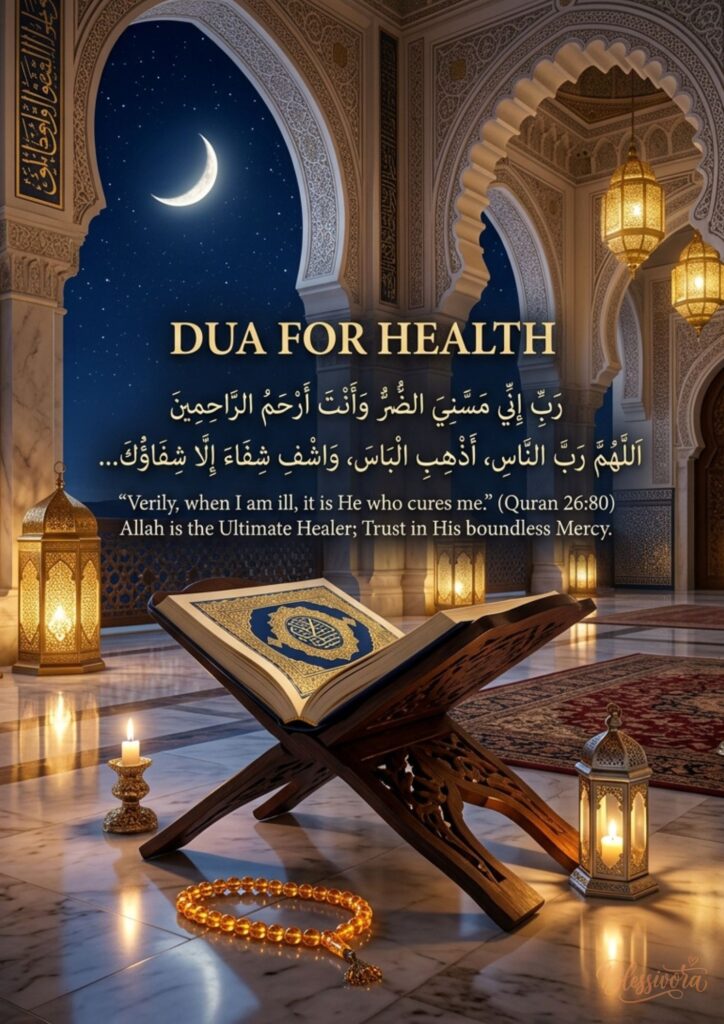
Pain can make even simple moments difficult. Islam provides guidance for seeking relief from pain through prayer while also encouraging appropriate treatment. The Prophet Muhammad ﷺ taught a supplication for pain in the body. A person places a hand on the painful area and says “Bismillah” three times. Then the person says seven times: “A’udhu billahi wa qudratihi min sharri ma ajidu wa uhadhiru.” This is a Dua for pain relief and a Dua for relief from pain.
A Dua for health recovery should never be viewed as a replacement for necessary healthcare. If you experience severe symptoms, persistent pain, or signs of serious disease, seek qualified medical attention. Your Dua for recovery from illness can accompany treatment. In this way, seeking healing and taking practical steps work together. You pray to Allah while using the means available to you.
Dua For Good Health From the Quran and Sunnah
The Quran contains powerful Quranic verses about healing, mercy, and hope. One widely known verse says that when Ibrahim عليه السلام spoke about illness, he said: “And when I am ill, it is He who cures me.” This statement appears in Surah Ash-Shu’ara 26:80. It highlights a central Islamic belief: Allah is the ultimate source of the cure. Muslims may seek treatment while trusting Allah’s power.
The Sunnah also contains many supplications connected with healing, safety, and protection. A reliable Islamic dua for healing should come from established Islamic sources whenever it is presented as a prophetic practice. Readers should be careful with attractive quotes shared online without references. A genuine Quranic dua for healing or authentic hadith deserves careful verification. Religious accuracy matters, especially when a prayer is attributed to the Prophet Muhammad ﷺ.
Why Dua For Good Health Is Important in Islam

A Dua for good health matters because Islam teaches believers to turn toward Allah in every situation. You can ask Him when you feel strong. You can also ask Him when you feel weak. This habit builds reliance on Allah and deepens trust in Allah. It reminds you that human strength has limits while Allah’s mercy has no boundary.
Health is also a profound blessing. Many people notice its value only after losing it. A person with healthy lungs may never think about breathing. Someone with strong legs may never consider walking a gift. Illness can change that perspective overnight. Through making dua, you can develop patience, gratitude, and awareness before hardship arrives. This is one reason Dua for health and well-being has such deep spiritual value.
When and How to Read Dua For Good Health
There is no single moment when you must make a Dua for health. You can turn to Allah whenever you need Him. However, Islamic teachings mention special times to make dua, including during sujood and the last part of the night. These moments can help you slow down and speak sincerely. You can also make personal dua after prayer or during quiet moments throughout your day.
The etiquette of dua includes sincerity, humility, and a heart that recognizes its need for Allah. You may begin by praising Allah and sending blessings upon the Prophet ﷺ. Then ask with hope and humility. If you know a prophetic healing prayer, recite it carefully. You may also make personal requests in words you understand. What matters most is sincere supplication, not complicated language.
Benefits of Making Dua For Good Health and Healing
The benefits of dua extend beyond asking for a specific physical result. Prayer can strengthen faith, encourage patience, and provide emotional comfort during difficult circumstances. When you make a Powerful dua for healing, you acknowledge your need for Allah. That recognition can bring a sense of peace during uncertainty. It can also help you maintain hope when recovery takes longer than expected.
A Dua for complete healing also reminds you to remain grateful during recovery. Even small improvements can feel significant after a difficult illness. You may regain sleep, appetite, movement, or energy one step at a time. Such moments encourage gratitude. Meanwhile, seeking protection and seeking healing can become regular parts of your spiritual life. Prayer does not guarantee a particular outcome. Instead, it strengthens your relationship with Allah through every outcome.
Other Powerful Duas for Health, Protection, and Healing
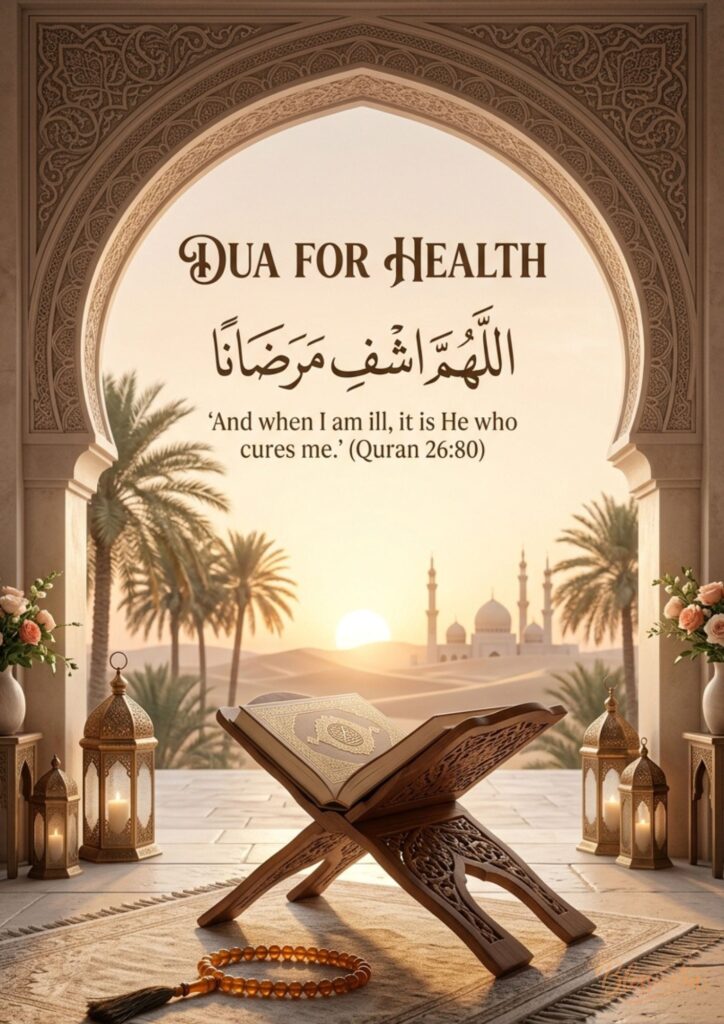
Islam contains many beautiful supplications for different situations. A Dua for protection from illness can ask Allah to keep you safe from harmful conditions. A Dua for protection and healing can express your dependence on divine mercy during sickness. You can also make a personal Dua to remove illness while asking Allah to grant strength and complete recovery.
For someone facing a long illness, a Dua for strength and healing can be especially meaningful. Recovery may feel like climbing a steep hill. Some days bring progress while others feel discouraging. During those moments, faith and patience become valuable companions. Continue making dua while following sound medical advice. A Dua for quick recovery expresses hope. It does not mean recovery must happen instantly or according to a fixed timetable.
| Situation | What You Can Ask Allah For |
| General wellness | Safety, good health, and well-being |
| Serious illness | Healing, strength, and patience |
| Physical pain | Dua for pain relief and comfort |
| Loved one is sick | Dua for a sick person and recovery |
| Recovery period | Strength, complete healing, and renewed health |
| Fear of illness | Dua for protection from illness |
| Emotional hardship | Peace, patience, and spiritual strength |
Frequently Asked Questions
What is the best dua for good health?
A beautiful Dua for good health is: “Allahumma inni as’alukal-‘afwa wal-‘afiyah fid-dunya wal-akhirah.” It asks Allah for pardon and well-being in this world and the Hereafter. The word afiyah carries a broad meaning that includes safety, soundness, and protection.
Which dua is for quick recovery from illness?
For someone seeking a Dua for quick recovery, authentic healing supplications from the Sunnah are appropriate. One famous prayer asks Allah to remove the harm and grant healing. You can also make personal dua for a speedy and complete recovery while seeking proper medical care.
What dua should I read for a sick person?
A well-known Dua for illness is: “As’alullaha al-‘Azima Rabbal-‘Arshil-‘Azimi an yashfiyaka.” It means, “I ask Allah, the Mighty, Lord of the Mighty Throne, to cure you.” This Islamic prayer for sickness can be made for an ill person.
Can I make dua for someone’s health?
Yes. You can make a Dua for someone’s health and ask Allah to grant healing, strength, protection, and ease. You can pray for parents, children, spouses, friends, and other loved ones. Sincere prayer for another person reflects compassion and care.
How many times should I recite a healing dua?
The number depends on the specific supplication. Some narrations mention particular repetitions while others do not. Therefore, avoid assigning a fixed number without evidence. Recite an Authentic dua for healing according to the established Sunnah when a specific repetition is reported.
Final Thoughts
Health is one of life’s quiet treasures. You often notice it most when it disappears. Islam encourages you to appreciate this blessing while turning toward Allah during hardship. A sincere Dua for health and healing can bring hope and spiritual comfort. It can also remind you that every moment of strength is a gift.
At the same time, faith encourages responsible action. Seek qualified medical care when you need it. Follow appropriate treatment. Support those who are sick. Then keep your heart connected to Allah through prayer, gratitude, and reliance on Allah. Whether you ask for healing from illness, recovery from pain, or protection from future hardship, make your dua with sincerity. Allah knows your condition, hears your words, and knows what lies within your heart.